



Hardened socialists might not enjoy this blog; by its very nature the subject is privilege and wealth.
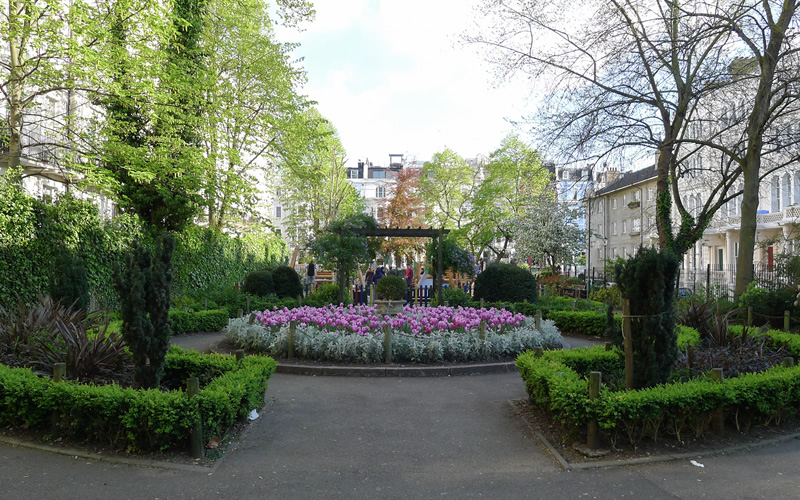
Green spaces define the character of all the chief European cities, but London is the only metropolis to have developed the garden square. There are around 290 of these in the central London boroughs and the majority are private; giving access, by key, to residents. It’s their exclusive, cloistered patch of calm and serenity in an urban landscape that hustles and bustles like no other.
Alas, because they are for the privileged few, your only vision of these uplifting squares is by stretching your neck to look over 6ft railings. Even then you will find that the trees and shrubbery provide a palisade giving the garden absolute privacy.
London squares were established throughout the industrial wealthy Georgian and Victorian periods and totally protected by law from any form of development. The most peculiar facto is that very few are square in shape. And some of the larger public access ones like Trafalgar no longer have an actual green space. Oddly the frenetic Leicester Square does, it’s the one you see in mega film premieres with the red carpet reaching across it.
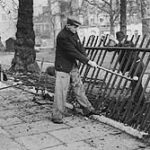 During WWII there was an initiative to amass scrap metal to enable the government to build munitions. The iron railings enclosing many London squares were dismantled and pledged to the war effort. Suddenly, the man on the street had unrestricted admission to picnic areas where they had never previously been welcome. Archives show they went on to make a right mess of the squares.
You can only admire Eaton Square from a distance unless you are in the billionaire class when you will have your own exclusive access. In a comical way this square must be a very lonely place at the moment as the local property owners were mainly Russian oligarchs. Even funnier is knowing the squatters have moved in, I wonder if they will have a private key to the square?
Not all the squares are in well-heeled neighbourhoods. A good example is Argyle Square, created in a particularly deprived part of Islington. But, the residents on the square were exceedingly prosperous; and in the adjacent streets some of the poorest in London. Booth’s Poverty Map, published in 1889, coloured the houses on the square red, meaning houses “with two servants” but the rest of the neighbourhood was coloured black – “semi-criminal”. Though the locality has changed dramatically in 2022 the property on the square still commands a much greater value than their neighbours.
The flora in the London squares will be a major force in the cleaning up of London air with trees sucking in carbon and pumping out oxygen. So, even though you can’t get into the garden squares you can get something out of them.